Showing posts with label PS Publishing. Show all posts

Wednesday, 5 May 2021

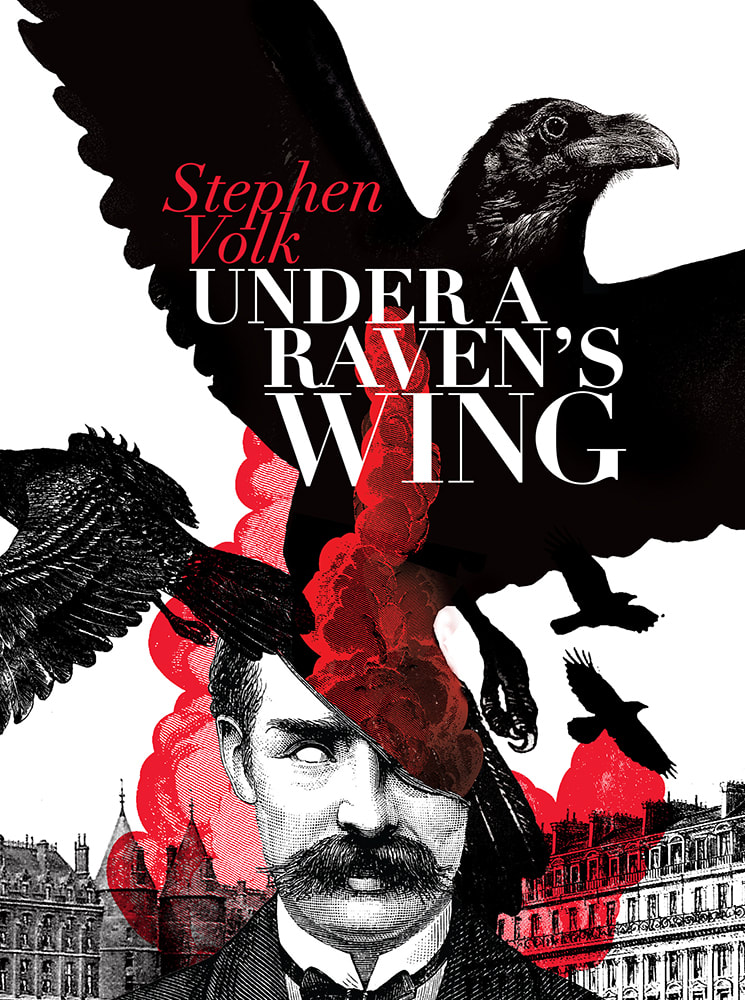
Under A Raven's Wing.


Under A Raven’s Wing
is a new collection of stories by Stephen Volk and is published by PS Publishing. The seven stories contained within this beautifully produced book describe the exploits of a young Sherlock Holmes and his tutelage, in the Paris of the 1870s, by another famous fictional detective C. Auguste Dupin. It’s a marvellous concept bringing together the two men - the veteran and the rookie - with the old master passing on his knowledge and wisdom to the young man at the beginning of his career, and something Sir Arthur Conan Doyle would heartily approve of I’m sure, having acknowledged his own debt to Poe’s detective when creating the character of Holmes.

All of the stories bar one are presented as letters from Holmes himself to Inspector Lestrade, written as the master detective nears the end of his own life; a neat inversion from the original stories in which the narrator was Holmes’ partner in crime(busting) Dr Watson. The final story, the incredibly poignant The Mercy of the Night, is the only one not to follow this format – except it sort of does. The bulk of the narrative is a letter from Dupin to Holmes – which finds its way to Lestrade nonetheless, courtesy of Holmes himself who adds his own correspondence as a coda, giving the whole thing the feeling of a story within a story, a dream within a dream.

I confess, the last sentence of that paragraph was a desperate attempt on my behalf to shoehorn a Poe reference in. And pretty awful it was – unlike those that are distributed about the book itself. There’s much joy to be had at spotting them – some are more obvious than others – and they’re an indication of just how much work has gone into producing these stories. The level of detail is astounding, in particular the recreation of the voices of the two fictional detectives both of which ring absolutely true.

With his wonderful Dark Masters Trilogy, Stephen showed himself a master at placing real people in fictional situations to produce compelling stories and insightful character studies. In Under A Raven’s Wing, he’s flipped that around, placing two fictional creations in real historical settings, populated by real people – including Jules Verne – and set against real events such as the dedication of the Statue of Liberty (a scene in which I believe I spotted an uncharacteristic lapse in the accuracy of Holmes’ recollections…) Jack the Ripper flits through one of the stories but there are nods to famous fictional characters too; the Phantom of the Opera and the Hunchback of Notre Dame also get honourable mentions.

There’s great skill employed then in the creation of this fictional/real world but the key to the success of any crime fiction – which is what this is after all – is in the plots themselves, the crimes which have to be solved. Once again, the author has come up trumps; the mysteries here are ones Poe and Conan Doyle would have been proud of creating themselves – seemingly impossible crimes which are solved by the characteristic application of logic and rationality. Whilst Holmes might be the main subject of the book, the nature of the mysteries he and Dupin solve owe more to the latter’s creator, most strikingly in Father of the Man which involves the plot device of a premature burial (and which is my favourite of the collection).

In truth, the book is an origins story, telling as it does of the apprenticeship of Holmes. As such, it does a marvellous job of inhabiting the character and even provides explanations for, and origins of, many of the great detective’s trademarks; the magnifying glass, the violin – even his drug addiction.

I really can’t express how impressed I was with Under A Raven’s Wing. The stories in here are some of the best to feature the character of Sherlock Holmes that I’ve read – and bear favourable comparison to the originals. It’s proof yet again that Stephen Volk is one of the most creative writers currently plying their trade and also one of the most skilled at his craft. It’s a book I recommend highly.

Thursday, 28 January 2021

On the Shoulders of Otava


On the Shoulders of Otava is a novella by Laura Mauro and is published by Absinthe Books, a new imprint of PS Publishing. Its title is taken from a line of the Kalevala, a nineteenth century epic poem which recounts the oral history of Finnish folklore and mythology. Extracts from the poem provide epigraphs for each chapter of the book - appropriately so, given the prominence the mythology has in the narrative of the novella.

The story is set in 1918, during the civil war which raged in Finland as a result of the political vacuum left behind after the end of the First World War. This conflict was a horribly literal class war, fought between the mainly middle and upper class Whites and the Reds of the Socialist Workers’ Republic. The war lasted fifteen weeks but tens of thousands died, many at the hands of death squads and executioners.

The protagonists of On the Shoulders of Otava belong to a unit of the Womens’ Guard -  a division of the Red Guard. Around 2000 women served in such units, some as young as fourteen. The story focuses on the experiences of Siiri, and begins with her glimpsing a shadowy figure in a churchyard, wandering as if in a trance. This figure turns out to be a fellow – male - soldier who, the next day, carries out a violent, seemingly unprovoked, attack on the squad leader.

The scene describing the attack is cleverly written – as are so many within the book – with the action happening at a distance, almost off-camera and only its aftermath being described in any detail. The reader gets to share the shock of the book’s characters as the nature of the wounds which have been inflicted are revealed in the discussion that follows the attack.

This flash of violence also serves to introduce the mystical aspects of the story (although this is kinda foreshadowed with the gothic-tinged shadow in the churchyard scene). The attack was completely out of character for the perpetrator – a “goody-goody” by all accounts – but the possibility is raised that it could be linked to his prior disappearance on a hunting trip in the woods during which he experienced what may have been a supernatural event.

As the narrative progresses, and Sirii and her companions find themselves isolated in those same woods, so the supernatural elements come more into play. The choice of an ancient woodland as location is a perfect one and an incredible sense of atmosphere is generated by some wonderful prose. It’s an inspired choice of location too, given the prevalence of the natural world, and animals in particular, in Finnish folklore. Most notable among these are Otso, the bear - a major player in the creation mythology and Tulikettu the firefox. Amid the established mythology, Laura has added (as far as I can tell) her own invention – that of ghost-lighting. It’s an intriguing concept, and one which lies at the heart of the narrative - so any further discussion here will unavoidably lead to spoilers.

Finnish folklore is possibly less well known to most than other nations’ variations – not least the Norse mythology of their Scandinavian neighbours and therefore necessitates some introduction. This is done skilfully however; the stories are cleverly woven into the narrative, never once feeling bolted on, instead merging into the flow of the story seamlessly.

Ambiguity plays a big part of course. The best weird fiction balances the fantastic with the normal, allowing the reader to arrive at their own decisions as to what is real and what isn’t. It’s all too easy to fall into the trap if being too obtuse, and leaving the reader scratching their head as to what they’ve just read. Such is not the case here. That fine line has been navigated very successfully and the novella is as accomplished at creating a sense of awe and wonder as it is in recording the harsh reality of being at war in a hostile climate.

On the Shoulders of Otava is a wonderful piece of writing. It’s beautifully constructed, the themes it establishes in the opening scenes carried through consummately to the conclusion. It’s a (relatively) short read but manages to pack in some great characters (and their interactions and motivations), social and political comment that doesn’t bludgeon the reader, elegant prose (written in a hugely involving present tense), a brilliantly created sense of atmosphere and a salutary reminder of mankind’s place (i.e. insignificance) in the grand scheme of things. It’s a book I highly recommend.

Friday, 2 August 2019

Apocalypse Then. And now...


Getting old has many advantages. To be fair, I’ve yet to experience any of them – the only changes I’ve noticed thus far are a musculo-skeletal system that seems to take a couple of hours longer to wake up than my brain (at which point it does nothing but complain anyway) and an increased desire to wave my fist and shout “gerroff my lawn!” at passers-by. Something else it’s brought however, is a wave of nostalgia which has manifest itself in a longing to revisit the books I read in my youth, to rekindle my love of the horror genre by reading the works that hooked me in the first place.
Joy then, greeted the news that PS Publishing have re-issued a book from one of my literary heroes, Stephen Laws, with a swanky new signed hardback and trade paperback edition of Chasm. First released in 1998, I not only read it then but attended a launch for it in Newcastle. The fact that Stephen hails from Newcastle, and set the majority of his novels in the North East played a big part in my admiration of him but not so much as the skill and imagination he employed in his writing did. Each of his novels – whilst grounded in the familiar tropes of the horror genre – always presented something original with new and entertaining ideas crammed into every intricately constructed plot.
Such is very much the case with Chasm, Stephen’s tenth novel, an epic (in every sense) tale of the aftermath of what appears to be an earthquake which strikes the town of Edmonville. Following the vividly described destruction, the town’s surviving residents find themselves marooned on isolated pillars of rock, the rest of the town having disappeared into what appears to be a huge crevasse.
The crevasse is, of course, the Chasm of the book’s title. And yes, I’ve used a capital C – exactly as the author does throughout the novel, and for good reason. This is no ordinary chasm, is in fact…
To say more would of course be a huge spoiler. Much of the joy of the novel comes from working out exactly what has happened alongside the book’s characters. Alongside the physical dangers faces by the protagonists, a host of supernatural threats are also thrown into the mix, most notably the Vorla, the darkness that dwells within the Chasm. The Vorla is a brilliant creation, a tour de force of imagination, a truly original monster.
The characters facing up to the horrors within Chasm are all skilfully drawn – real people thrown into an unreal situation and reacting in exactly the ways their characters dictate. The book’s protagonist is Jay O’Connor (whose initials – minus the O’ - may or may not be significant) whose journal entries provide a framing device for the novel. Jumping between these journal entries and the narrative itself (told in third person) lends a fragmented nature to the novel, something I loved as someone who appreciates form as much as content in a novel. This effect is further enhanced by introducing what appears to be a completely separate storyline in the early part of the book, the “Ordeal of Juliet Delore” before cleverly bringing the two strands together.
A feature of Stephen’s writing is the cinematic feel he brings to his stories. His prose is so precise and his powers of description so skilful that it really does feel as if you’re watching a film as you read the book. There are some who will throw their hands in the air at this, or possibly wring them theatrically as they cry out, protesting that books and films are different art forms but personally I greatly appreciate any author who has the skill to paint pictures with their words that put images directly into my head. Chasm is a prime example of this skill, with a whole host of brilliantly rendered set-pieces to enjoy.
Chasm is a long book, but so tightly written and with so much action contained within that you’ll fly through it. The fractured structure lends itself to plenty of cliff-hangers (including one thrilling literal example) which keep the reader hooked. The supernatural horrors are a joy to read – a mix of originality and new variations of established tropes – but it’s the introduction of some human monsters in the book’s third act that ushers the reader towards the conclusion.
I vaguely remember a feeling of disappointment when I first read Chasm that the horror had switched tone but on my re-read now see that it was in fact a master-stroke. Throughout, the book is beautifully constructed, edited to maintain pace wonderfully, storylines and characters interacting to brilliant effect and so it is that the introduction of the Caffney family provides the catalyst for the novel’s dénouement, disrupting the tenuous status-quo the narrative had fallen into.
There’s heroism, redemption and action galore in the conclusion of Chasm and, ultimately, the explanation both characters and readers have been searching for. If I have any criticism of the book it’s probably that the huge ideas the events described in the novel are based on are covered relatively quickly. It’s far from an info-dump but perhaps a little more time spent on the revelations may have been better.
I loved re-reading Chasm, enjoyed it more this time round. Given it was written in 1998, I had concerns that it may have felt a little dated given that this is the original text of the book. To be honest, this isn’t the case. True, there are no mentions of the internet or mobile phones – smart or otherwise – but, given the cataclysmic events which occur disable all means of contact with the outside world this isn’t really an issue. At one point a Ford Cortina appears but this only added to the nostalgic glow I was seeking anyway.
I’m so happy that Chasm has been given a new lease of life and is available again to a new generation of readers. It’s a thrilling, terrifying, thought-provoking read – pretty much everything I want from a horror novel.
You can – and should – buy it here.

Monday, 8 October 2018

The Dark Masters Trilogy


The Dark Masters Trilogy is published by PS Publishing and brings together the two previously published novellas, Whitstable and Leytonstone alongside the concluding story in the series, Netherwood. All are written by Stephen Volk, and are fictionalised accounts of episodes in the lives of notable talents in the creative arts, Peter Cushing, Alfred Hitchcock and Dennis Wheatley respectively, the books’ titles originating from the locations in which those events occur.
I’ve already reviewed both Whitstable and Leytonstone – here and here – so this review will focus mainly on Netherwood. The titular location is a boarding house in Hastings, the final residence of the Great Beast himself, the wickedest man in the world, Aleister Crowley and the place to which he summons novelist Dennis Wheatley. Although this meeting is fictional, the two men had actually met in real life some years earlier at the Hungaria Restaurant near Piccadilly Circus, and it’s this prior connection which Crowley, (and the story), exploits. Following the meeting, Wheatley based some of his characters on Crowley – thinly enough that umbrage, or even offence could be taken. Possibly enough that some kind of revenge would seem appropriate…
Perhaps the most notable achievement of the two previous novellas was the degree of characterisation they presented, offering new insights into both Cushing and Hitchcock. Such skill is even more evident in Netherwood with an equal emphasis on both Wheatley and Crowley. Whilst this is a work of fiction, it is - has to be – grounded in fact and the requisite exposition and back-story is presented here in masterful fashion. The novel opens with a scene set on a train in which Wheatley meets a young soldier and his sweetheart, the dialogue – both internal and external – providing the story of Wheatley’s military service in a way that appears seamless and natural. Anyone aspiring author, (and a few established ones), should use this trilogy as a masterclass in developing character. The information is all there but isn’t dumped on the reader, rather it’s presented as part of the natural flow of the narrative, character is revealed by action and interaction. It’s sublime stuff.
It’s a little unfortunate that Wheatley is up against Crowley here; unfortunate in that in comparison to the force of nature that is the most famous member of the Golden Dawn he comes across as a little anodyne. Crowley, however, is a different matter altogether. Despite his frailty, (he was at this point close to death), he dominates every scene; unstable, eccentric, impossible to read there’s a real sense of unease and disquiet whenever he appears. Anyone whose “career” is built on spouting, to all intents and purposes, bullshit, requires a huge amount of charisma to be successful and this was undoubtedly the case with Crowley. Charismatic enough to entice a figure of the establishment such as Wheatley, (a man who is inwardly please that the soldier on the train doesn’t recognise him), to answer his call.
The reason for Wheatley’s attendance turns out to be more than just catching up on old times however. He is there to help Crowley, to face a threat which will be too much for the frail, heroin addicted “beast” to confront on his own. Once again, great skill is shown in presenting the scenario around the threat and the discussions which convince the staid author to participate.
That participation involves the performance of a magick ritual, the presentation of which is yet another highlight of this brilliant novel. As seen through the experiences of Wheatley, it’s a stream of altered consciousness full of graphic and disturbing imagery.
It’s the crowning glory of Netherwood that Crowley’s motivations in involving Wheatley remain ambiguous. The hint of revenge – or spite - suggested earlier may be the case but other interpretations hold equal weight. Redemption is a common theme in conclusions and this too may be the case. Netherwood pours away the snake-oil, revealing the hidden depths to Crowley’s character and it’s possible that a personal tragedy is the driving force behind this final act. Maybe the motivation was his humanity after all.
Humanity – or, more precisely, human nature – has been the underlying theme of all three books in the trilogy. The three books have followed a traditional structure with the second part the darkest by far. A strange claim perhaps, given the black magic and Satanism which is so much a feature of Netherwood but my feelings on finishing this final part of the trilogy were ones of optimism, not least because of the stirring meditation on the nature of art – and artists (another theme of the whole trilogy) – on which it ends.
Each book in the trilogy is a masterpiece. Combined, they produce a kind of synergy, creating an outstanding reading experience. Perhaps their greatest achievement is to provide convincing portrayals of their protagonists despite being fictional accounts, all done through the skill and craftsmanship of the writing. Now that’s real magick.

Monday, 27 March 2017

The Little Gift

One of my favourite things in the world is to read a story and then, once it’s finished, find myself still thinking about it, reassessing and re-evaluating what I’ve read, gaining fresh insights, revealing subtleties which registered only subconsciously on first exposure to the words.
Such was very much the case with the new novella from Stephen Volk, The Little Gift which is published by PS Publishing.
It’s a slim, but beautifully produced (and illustrated), volume and I rattled through it in a single sitting in less than an hour. Its brevity belies its content however as what we’re given here is a tale of massive depth, the words and story undergoing some magical synergy to create a piece of work which stealthily infiltrates your mind, a first person narrative which makes you believe the story is heading in one direction before craftily heading off somewhere completely different.
The first person narrative is absolutely essential to the story. Yes, the narrator is unreliable – but aren’t they all? Narrators (not to say readers) will always superimpose their own interpretations on stories but his unreliability isn’t the most important thing anyway. What the narrative provides here is a beautifully crafted exploration of character. And not a very nice character at that.
It’s difficult to say too much about the Little Gift without giving away key plot developments. Bad things happen, some very bad things happen – both directly and indirectly involving the narrator and it’s his attitudes towards these events which provide the deepest insights into his character.
I chose Stephen’s story The Peter Lorre Fan Club as my favourite of last year because of the skill with which he slowly unfolded the story by means of dialogue alone and there’s as much skill on display here this time using a monologue. Some may find metaphors for society in general in the attitudes of the narrator, but even as “just” a description of a fairly – actually deeply – unpleasant individual, The Little Gift is an outstanding piece of writing.

A week after reading it, I’m still mulling over The Little Gift. It’s a very, very clever piece of writing and I highly recommend you check it out for yourself.

Monday, 10 October 2016

Electric Dreamhouse - Midnight Movie Monographs.

The Electric Dreamhouse Press is a new imprint created by editor Neil Snowdon and which publishes via PS Publishing. The focus of the imprint is cinema – in particular horror cinema – and its inaugural publications are the first two books in a planned series of Midnight Movie Monographs.
The movies under consideration are at different points along the spectrum of horror although both were made in the 1970s, arguably the most exciting decade in film history.


Theatre of Blood is a glorious mix of horror and black comedy and was released by United Artists in 1973. Directed by Douglas Hickox, it stars Vincent Price as Edward Lionheart, a Shakespearian actor on a bloody quest to dispatch a group of theatre critics who failed to honour him with an award, using the Bard’s plays as inspiration for the murders.
Given the subject matter, and tone of the film, who better to write a book about it than John Llewellyn Probert, a man with an encyclopaedic knowledge of film and – more importantly – a deep love of the horror genre? It’s a fair bet that John knows exactly who the second assistant Grip on The Brides of Dracula was – a fact that even the actual second assistant Grip on The Brides of Dracula probably can’t remember. John’s love of the genre comes across in every book he writes (and on his review site The House of Mortal Cinema) and it’s on full display here too. This is a detailed analysis of the film but is written with such glee and enthusiasm that it truly is a joy to read. In his introduction, John describes it as more like a commentary track on a DVD than a weighty thesis and that’s exactly how it reads as, scene by scene, he explains what’s going on, why and how - adding priceless nuggets of trivia along the way.
The film is a favourite of John’s – and inspired his glorious Dr Valentine novellas – and was one he experienced for the first time back in the eighties as part of the horror double bills shown on TV. Such was my experience and I had to smile when I found out that I was not the only person whose abiding memory of the film was Robert Morley’s poodles… I was also pleased to see that John is still unsure as to whether Diana Rigg’s disguise was meant to fool the audience or not, even on first viewing as a callow youth I was never taken in by it and was therefore unimpressed by the “reveal” scene.
I loved this monograph, a perfect combination of information and fandom.

The second of the two books is Jez Winship’s analysis of Martin, George A Romero’s 1977 alternative take on the vampire legend.


I have a suspicion that my first (and only) viewing of Martin was as part of the aforementioned horror double bill series, though I may be mistaken. (I shall ask John Llewellyn Probert, he’ll know). Whenever it was, my memories of it are less substantial than those of Theatre of Blood (although those of the latter were enhanced by my viewing of it at a night class run by the Tyneside Cinema a few years back) but, to my dishonour, I do remember being less than impressed by it. This is something I can only put down to youthful arrogance and naivete – “art house” were dirty words to me back in the day… (Thankfully, I have obtained a degree of maturity now. In film appreciation at least).
This book is a lot more formal affair, a more detailed – if not forensic – analysis of the film. These books are of course monographs – in effect personal opinions – but there’s a weight to everything Jez puts forward in this book and, after reading it, if you weren’t already you’ll be very aware of how much thought and care is put into making a film even down to the details of the camera angles employed and the props used – even a paperback book glimpsed for only a few seconds in one scene has a deep significance.
I loved reading these books. Genre films –and horror films in particular – often have a bad press, dismissed as throwaway entertainment, lacking in any artistic merit. This is patently untrue of course and books such as these are proof, if it were needed, that the reality is quite the opposite.
Do you need to have seen the films to enjoy the books? Err… yes, probably. The structure of both volumes is the same, in that the authors describe the film scene by scene, adding insight and information as they go. In truth, once you’ve finished the book, you’ll technically have seen the film as everything that happens has been described. My tip: Watch the film, read the book, watch the film again.

Neil has created something good here – something really good. The list of forthcoming titles is impressive, as are the authors lined up to present their thoughts and opinions on some classics of horror cinema. It’s a project I hope to see going from strength to strength, and I wish it every success in the future.

Tuesday, 12 February 2013

Where Furnaces Burn.

Where Furnaces Burn is a collection of stories by Joel Lane and is published by PS Publishing. There are twenty six stories in the book, all told in first person narrative and chronicle case studies of a policeman (enigmatically anonymous) working in the West Midlands. It's a stunning collection and is at the same time possibly the bleakest thing I've ever read.
The stories within these covers will take you to some very dark places and, in many instances will leave you there, many of the stories in here are open-ended, lack resolution, anyone looking for straightforward procedurals with neatly tied off denouments are going to be seriously disappointed. However, anyone looking for beautifully written prose examining the darkest reaches of human nature are going to revel in the goods on display here.
The first person narration turns this collection into more of an extended stream of consciousness. There's much abyss gazing here and, because the abyss does so much more than simply gaze back, the narrator becomes the most unreliable of his kind, casting a massive air of ambiguity over what he is describing.
The theme of decay runs throughout this collection, urban decay, the decay of society, the decay of the individual. The smell of rotten buildings is mentioned in many of the stories, descriptions of patches of mould and damp are rife, all serving to create an atmosphere of desolation, the external environment reflecting the inner turmoil of the narrator. It's a long dark night of the soul and there are very few moments of lightness, the  only humour present the in-joke of having two PCs named McMahon and Bestwick.
There's horror here aplenty, a supernatural aspect to the cases and the concept of a gradual descent into Hell with contact being made via arcane rituals, damaged individuals and portals appearing amidst decaying buildings. "There was no room for the unknown" the narrator tells us in the opening story, trying to explain why he chose the police as a career. The phrase reads as naive on first encounter, on completion of the book its irony is profound.
Where Furnaces Burn is a demanding read, disturbing and utterly bleak. The writing is superb though, poetic even (my favourite line compares a hole in the floor to "an infected wound in an old man's foot") and is as effective in describing the breakdown of the narrator's relationships as the supernatural entities and forces he comes up against.
Highly recommended.